
















Zinc Anode / 2.45 kg
SVB item number: 21401


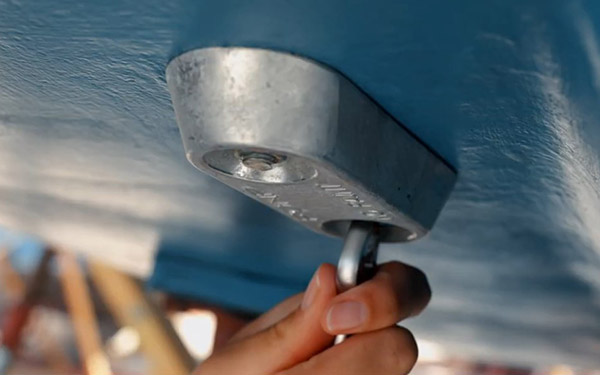
This zinc anode has very little resistance in the water due to its flat shape. Product details
Having issues?
If you are not redirected to PayPal, it could be due to your browser settings. Please check and if necessary deactivate the setting "Hide IP address" in the settings -> Safari -> Hide IP address. Please also check your browser for updates.
If you are not redirected to PayPal, it could be due to your browser settings. Please check and if necessary deactivate the setting "Hide IP address" in the settings -> Safari -> Hide IP address. Please also check your browser for updates.

Are you already using this item?
Add to my boat now.


Product data
- SVB item number 21401
- EAN 1957000008491
- Description Zinc Anode / 2.45 kg
- Weight 2.45 kg
- Material Zinc
- Area of application Salt water
- Shape Oval
- Length 250 mm
- Width 75 mm
- Height 38 mm
- Hole Centers 140 mm
- Hole diameter 11 mm
- Accessories for Not specified

Product details
Zinc anodes, also called "sacrificial anodes," protect all of the metal parts located underneath the water line (hull) from corrosion. In order to protect the boat's hull from corrosion, the hull is connected to a more inferior metal (anodes), which are oxidized more easily. For example: A zinc anode is attached to a boat with a steel-alloy hull, which causes the inferior metal of the anode (zinc) to sacrifice itself, in order to protect the high-quality metal of the boat's hull from corrosion.
Usually "sacrificial anodes" have to be changed after each season, even more frequently in highly corrosive waters. The anodes are attached along the keel. The current intensity is larger at the hindsteven, due to the position of the propeller. It is advisable to use several anodes. Anodes should also be attached to the rudder blade and propeller shaft. For vessels mainly operated in fresh water, we recommend using aluminum anodes because of the greater potential difference it has to other metals, in comparison to zinc.
This zinc anode has very little resistance in the water due to its flat shape.
Usually "sacrificial anodes" have to be changed after each season, even more frequently in highly corrosive waters. The anodes are attached along the keel. The current intensity is larger at the hindsteven, due to the position of the propeller. It is advisable to use several anodes. Anodes should also be attached to the rudder blade and propeller shaft. For vessels mainly operated in fresh water, we recommend using aluminum anodes because of the greater potential difference it has to other metals, in comparison to zinc.
This zinc anode has very little resistance in the water due to its flat shape.
Documents
 Datasheet
PDF (16,92 KB)
Product safety


Customers ask customers
No questions asked yet. Be the first to ask a question!
Customers also bought

Zinc Anodes with Straps
from
€9.50
4 variants
HEMPEL
One-Component UNDERWATER PRIMER
from
€24.95
(€33.27 / L)
2 variants
INTERNATIONAL
PROP-O-DREV Propeller Antifouling
from
€29.95
(€59.90 / L)
2 variants
HEMPEL
MILLE NCT Self-Polishing Antifouling
from
€38.95
(€51.93 / L)
10 variants
BAVARIA
Door Stop Protector / Wall Guard
only
€4.40
Zinc Anode / 1 kg
only
€18.95
32
Similar items
Zinc Anodes with Straps
from
€9.50
4 variants
Zinc Anode / 1 kg
only
€18.95
32
Zinc Anode with Long Hole / 1.2 kg
only
€25.95
34
Zinc Anode with Long Holes / 2.4 kg
only
€37.95
> 100
Zinc Hull Anodes, Flat Shape with Boreholes
from
€19.95
3 variants
Zinc Double Anodes, round Shape
from
€17.95
4 variants
Zinc Anodes for Aluminum Boats
only
€54.95
Zinc anode on steel plate /3 kg
only
€54.95
24
E-mail Newsletter
Product news, offers & new guide videos. Stay up to date!
WhatsApp
New: Get news from SVB straight to your phone!