
















DIGITAL YACHT OneFix / High-precision anti-spoofing GNSS position sensor
SVB item number: 88955
Manufacturer no.: ZDIGONEFIX


The OneFix is a high performance GNSS positioning sensor designed for maximum accuracy and reliability. By using several satellite systems simultaneously in combination with modern dual-band technology, it enables extremely precise positioning with an accuracy of less than 1 metre.
Particularly noteworthy are the integrated, robust anti-spoofing algorithms, which recognise and fend off attempts at manipulation and thus ensure significantly more reliable and secure navigation. Product details
Particularly noteworthy are the integrated, robust anti-spoofing algorithms, which recognise and fend off attempts at manipulation and thus ensure significantly more reliable and secure navigation. Product details
Recommended retail price:
€470.05
only
€439.95
-6%
You save: €30.10
Expected to be in stock within 6-8 weeks
Having issues?
If you are not redirected to PayPal, it could be due to your browser settings. Please check and if necessary deactivate the setting "Hide IP address" in the settings -> Safari -> Hide IP address. Please also check your browser for updates.
If you are not redirected to PayPal, it could be due to your browser settings. Please check and if necessary deactivate the setting "Hide IP address" in the settings -> Safari -> Hide IP address. Please also check your browser for updates.

Are you already using this item?
Add to my boat now.


Product data
- SVB item number 88955
- EAN 703791696772
- Manufacturer no. ZDIGONEFIX
- Description DIGITALYACHT - OneFix GNSS receiver
- Antenna technology Active GPS antenna
- Antenna type Navigation antenna
- Positioning accuracy up to 1 m
- Compatible satellites GPS, Galileo, GLONASS, BeiDou
- NMEA2000 Yes
- NMEA0183 Yes
- SeaTalk NG No
- Connector NMEA0183, Micro-C
- Material Plastic
- Waterproof Yes
- Length 160 mm
- Width 103 mm
- Height 50 mm
- Weight 600 g


Product details
The DIGITALYACHT OneFix is a high-precision GNSS position sensor for boats, developed for sailors and motor boaters who expect the highest accuracy and maximum reliability. By simultaneously using several global satellite systems and modern dual-band GNSS technology, the OneFix GPS receiver enables extremely precise positioning with an accuracy of better than 1 metre.
A special feature of the OneFix GPS antenna is the integrated, advanced anti-spoofing algorithms, which recognise and fend off attempts to manipulate satellite signals. This ensures significantly safer and more stable navigation - even in demanding or sensitive navigation environments.
Thanks to its high level of compatibility, OneFix can be easily integrated into almost any existing on-board navigation system. It can be connected to smartphones and tablets as well as modern NMEA 2000 chartplotters, making it a flexible solution for a wide range of boat and yacht configurations. OneFix thus offers every sailor a highly accurate, future-proof and reliable navigation solution.
Many people are familiar with the term GPS, but the technically correct term is GNSS (Global Navigation Satellite System). GNSS comprises several global satellite networks such as GPS, GLONASS (with separate DIGITALYACHT TriNav antenna), Galileo, BeiDou and NavIC, which are used together to determine position. Modern marine electronics are able to receive signals from several of these systems simultaneously and automatically select the most accurate network for position calculation.
Another significant advance in GNSS technology is the introduction of multi-band GNSS. Modern satellites now transmit their signals on several frequency bands, in particular L1 and L5. By using a powerful dual-band GNSS receiver, the OneFix GPS antenna can combine these signals and thus significantly reduce positioning errors. Many conventional GPS devices and chart plotters work exclusively with L1 frequencies and cannot utilise the advantages of this technology - OneFix, on the other hand, fully exploits this potential.
The most important OneFix features explained
GPS, Galileo, Beidou and NavIC support
OneFix is equipped with a powerful dual-band processor (L1 and L5) and uses the GPS, Galileo, NavIC and BeiDou satellite systems to calculate its position. Support for GLONASS (Russian satellite system) is also available as an option via a second antenna.
In addition, the OneFix GNSS position sensor uses intelligent, advanced algorithms that compare the position data of all satellite networks and frequency bands received. This effectively detects and minimises GPS spoofing, signal manipulation and position deviations. The result is exceptionally reliable and stable positioning with a typical accuracy of less than 1 metre.
NMEA0183 / NMEA2000 and WLAN interface
OneFix was specially developed to reliably support both older navigation systems via NMEA 0183 and modern on-board networks with NMEA 2000. This means that the position sensor can be flexibly integrated into almost any existing boat or yacht installation.
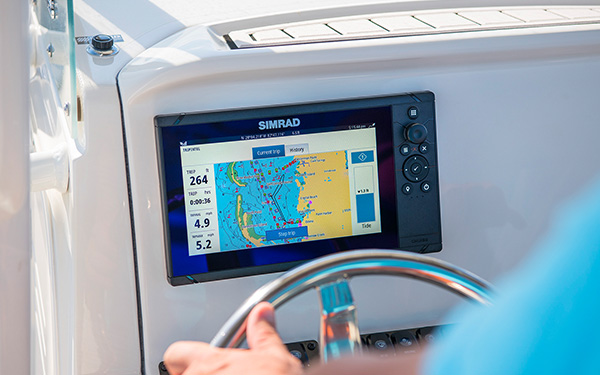
OneFix also provides wireless NMEA 2000 data output via the password-protected WLAN interface. This means that navigation and mapping apps such as Navionics, TimeZero, AquaMaps, NV Charts and many others can be supplied directly with position and on-board data. The OneFix GPS sensor summarises AIS, wind, depth, compass and speed data from the NMEA 2000 network and transmits it wirelessly. In this way, OneFix transforms tablets, PCs, smartphones or iPads into a fully-fledged, high-precision navigation system with dual-band GNSS (L1 + L5).
Data logging and tracks
The integrated user interface of the high-precision OneFix position sensor for boats offers comprehensive data logging and event marking functions. This allows you to record and save important points on a trip - or specific fishing and anchoring spots - directly in the internal memory.
Saved event markers and track log files can then be downloaded in GPX or KML format. This makes it easy to import and visualise the recorded data in Google Maps, navigation software or digital nautical charts.
OneFix also supports two external switching inputs as well as a convenient "Add Mark" function within the web interface, which can be used to set events with particular precision. For detailed analyses, complete RAW data logging of the NMEA 2000 network is also available - ideal for analysis purposes, troubleshooting or professional applications.
MOB and NMEA2000 warning messages
The OneFix GPS receiver is able to generate alerts directly on the NMEA 2000 network and display them as pop-up notifications on compatible multifunction displays (MFDs). In combination with the NavAlarm siren, this creates an extremely powerful acoustic warning system that ensures critical events are not overlooked. OneFix recognises and reports position inaccuracies, signal manipulation (spoofing) and system errors, thus making a decisive contribution to greater safety and reliability on board.
Simple configuration
Accessing the OneFix user interface is particularly easy and convenient. All you need is a smartphone, tablet or PC to connect to the integrated web interface - no internet connection is required.
Simply open a standard web browser such as Google Chrome, Safari or Mozilla Firefox and enter the fixed IP address of OneFix (192.168.1.1). The complete, integrated web interface is then available to you.
This interface gives you access to advanced NMEA 2000 network diagnostics, including a detailed device list, PGN displays and comprehensive status information. In addition, users can select the sources for NMEA 2000 multiplex data, giving them a high degree of flexibility and optimum control when managing and configuring the on-board network.
Technical data
A special feature of the OneFix GPS antenna is the integrated, advanced anti-spoofing algorithms, which recognise and fend off attempts to manipulate satellite signals. This ensures significantly safer and more stable navigation - even in demanding or sensitive navigation environments.
Thanks to its high level of compatibility, OneFix can be easily integrated into almost any existing on-board navigation system. It can be connected to smartphones and tablets as well as modern NMEA 2000 chartplotters, making it a flexible solution for a wide range of boat and yacht configurations. OneFix thus offers every sailor a highly accurate, future-proof and reliable navigation solution.
Many people are familiar with the term GPS, but the technically correct term is GNSS (Global Navigation Satellite System). GNSS comprises several global satellite networks such as GPS, GLONASS (with separate DIGITALYACHT TriNav antenna), Galileo, BeiDou and NavIC, which are used together to determine position. Modern marine electronics are able to receive signals from several of these systems simultaneously and automatically select the most accurate network for position calculation.
Another significant advance in GNSS technology is the introduction of multi-band GNSS. Modern satellites now transmit their signals on several frequency bands, in particular L1 and L5. By using a powerful dual-band GNSS receiver, the OneFix GPS antenna can combine these signals and thus significantly reduce positioning errors. Many conventional GPS devices and chart plotters work exclusively with L1 frequencies and cannot utilise the advantages of this technology - OneFix, on the other hand, fully exploits this potential.
The most important OneFix features explained
GPS, Galileo, Beidou and NavIC support
OneFix is equipped with a powerful dual-band processor (L1 and L5) and uses the GPS, Galileo, NavIC and BeiDou satellite systems to calculate its position. Support for GLONASS (Russian satellite system) is also available as an option via a second antenna.
In addition, the OneFix GNSS position sensor uses intelligent, advanced algorithms that compare the position data of all satellite networks and frequency bands received. This effectively detects and minimises GPS spoofing, signal manipulation and position deviations. The result is exceptionally reliable and stable positioning with a typical accuracy of less than 1 metre.
NMEA0183 / NMEA2000 and WLAN interface
OneFix was specially developed to reliably support both older navigation systems via NMEA 0183 and modern on-board networks with NMEA 2000. This means that the position sensor can be flexibly integrated into almost any existing boat or yacht installation.
OneFix also provides wireless NMEA 2000 data output via the password-protected WLAN interface. This means that navigation and mapping apps such as Navionics, TimeZero, AquaMaps, NV Charts and many others can be supplied directly with position and on-board data. The OneFix GPS sensor summarises AIS, wind, depth, compass and speed data from the NMEA 2000 network and transmits it wirelessly. In this way, OneFix transforms tablets, PCs, smartphones or iPads into a fully-fledged, high-precision navigation system with dual-band GNSS (L1 + L5).
Data logging and tracks
The integrated user interface of the high-precision OneFix position sensor for boats offers comprehensive data logging and event marking functions. This allows you to record and save important points on a trip - or specific fishing and anchoring spots - directly in the internal memory.
Saved event markers and track log files can then be downloaded in GPX or KML format. This makes it easy to import and visualise the recorded data in Google Maps, navigation software or digital nautical charts.
OneFix also supports two external switching inputs as well as a convenient "Add Mark" function within the web interface, which can be used to set events with particular precision. For detailed analyses, complete RAW data logging of the NMEA 2000 network is also available - ideal for analysis purposes, troubleshooting or professional applications.
MOB and NMEA2000 warning messages
The OneFix GPS receiver is able to generate alerts directly on the NMEA 2000 network and display them as pop-up notifications on compatible multifunction displays (MFDs). In combination with the NavAlarm siren, this creates an extremely powerful acoustic warning system that ensures critical events are not overlooked. OneFix recognises and reports position inaccuracies, signal manipulation (spoofing) and system errors, thus making a decisive contribution to greater safety and reliability on board.
Simple configuration
Accessing the OneFix user interface is particularly easy and convenient. All you need is a smartphone, tablet or PC to connect to the integrated web interface - no internet connection is required.
Simply open a standard web browser such as Google Chrome, Safari or Mozilla Firefox and enter the fixed IP address of OneFix (192.168.1.1). The complete, integrated web interface is then available to you.
This interface gives you access to advanced NMEA 2000 network diagnostics, including a detailed device list, PGN displays and comprehensive status information. In addition, users can select the sources for NMEA 2000 multiplex data, giving them a high degree of flexibility and optimum control when managing and configuring the on-board network.
Technical data
- High-precision position sensor for boats with an accuracy of better than 1 metre.
- Utilises GPS, Galileo, Beidou and NAVIC constellations, with optional Glonass sensor.
- Dual band receiver and antenna L1/L5.
- Anti-spoofing algorithm that continuously monitors each GNSS and issues warning messages in the event of interference.
- NMEA 0183 and NMEA 2000 interface.
- WLAN interface for navigation on mobile phones and tablets.
- Web interface for configuring and analysing satellites.
- Integrated data log with point export via GPX/KML.
- NMEA 2000 data on wind, depth, speed, AIS and compass, multiplexed via WLAN for apps.
- Optional MOB switch for generating synthetic AIS-MOB-SART messages in NMEA 2000.
- Error alarms via NMEA 2000.
- Output for external alarm.
- 1PPS timing output.

Product safety
Customers ask customers
No questions asked yet. Be the first to ask a question!
Similar items
-10%

RAYMARINE
RS150 GPS Sensor
€339.15
only
€304.95
7
RAYMARINE
GA200 Passive GPS Antenna
only
€165.95
2
-23%
SIMRAD
GS25 GPS Antenna
€348.61
only
€269.95
Available on 24.07.2026
-15%
B&G
ZG100 GPS-Antenna
€348.61
only
€297.95
3
-10%
GARMIN
GA38 Passive GPS Antenna incl. 10m Connection Cable
€100.00
only
€89.95
4
-9%
GARMIN
GPS24xd / NMEA2000 GPS Antenna
€319.00
only
€289.95
5
-6%
GARMIN
GPS24x HVS / NMEA0183 GPS Antenna
€319.00
only
€299.95
3
ZIPWAKE
External GPS Antenna
only
€359.95
Expected to be in stock within 2-3 weeks
DIGITAL YACHT
GV30 AIS-GPS Combination Antenna
only
€189.95
6
STANDARD HORIZON
External GPS Active Antenna
only
€253.95
1
Last seen products
-21%
AUTONAUTIC
MINOR 72 Quartz Clock / white dial / gold-plated
€87.51
only
€68.95
3
Kapok Double Cushion / navy blue / wide stripes
HARKEN
Jaw Kit for RADIAL 50
only
€49.95
5
-6%
SPINLOCK
PXR Cam Cleat / single / 8-10 mm
€69.00
only
€64.95
21
-20%
AUTONAUTIC
MINOR 72 Thermometer / white dial / gold-plated
€87.51
only
€69.95
2
NAUTIC Universal Line / green / 50 m reel
from
€3.95
(€0.08 / m)
3 variants
NEW
LIROS
D-PRO Dyneema Hollow Braid / white
from
€16.95
(€1.13 / m)
3 variants
-7%
ISOTHERM
Compact Classic 2007 Cooling System / with L-evaporator
€707.01
only
€659.95
Available on 04.08.2026
E-mail Newsletter
Product news, offers & new guide videos. Stay up to date!
WhatsApp
New: Get news from SVB straight to your phone!