
















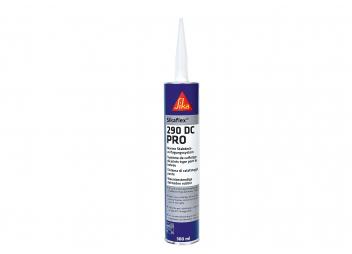
SIKA Sikaflex - 290DC PRO Deck Joint Grouting / 300 ml
SVB item number: 21007
Manufacturer no.: 290DC PRO


Sikaflex 290DC PRO is a one part polyurethane sealant which has been specially developed for grouting deck joints (teak). Product details
Having issues?
If you are not redirected to PayPal, it could be due to your browser settings. Please check and if necessary deactivate the setting "Hide IP address" in the settings -> Safari -> Hide IP address. Please also check your browser for updates.
If you are not redirected to PayPal, it could be due to your browser settings. Please check and if necessary deactivate the setting "Hide IP address" in the settings -> Safari -> Hide IP address. Please also check your browser for updates.

Are you already using this item?
Add to my boat now.
Available variants


Product data
- SVB item number 21007
- EAN 7612895460000
- Manufacturer no. 290DC PRO
- Description Sikaflex 290DC PRO
- No. of components 1 component
- Package Cartridge
- Intended use Sealing, Grouting
- Examples of use Grouting compound
- For substrate Wood
- Seawater resistant Yes
- UV-resistant Yes
- Contents 300 ml
- Colour Black
- Compatible pre-treatment MultiPrimer Marine, Primer 290 DC
- Packing Unit 1 pcs


Product details
Sikaflex 290DC PRO is a one part polyurethane sealant which has been specially developed for grouting deck joints (teak). Sikaflex 290DC PRO has very good weather resistance, making it suitable for exposed joints in the marine sector, which are exposed to direct weathering. Packaging: 300 ml cartridge.
Sikaflex 290DC PRO meets the requirements of the International Maritime Organisation (IMO).
Advantages
Application areas:
Sikaflex 290DC PRO is used to cover strips (teak) on marine vessels.
This product is only suitable for experienced users. In order to ensure adhesion and material compatibility, preliminary tests must be performed with the original materials under the respective conditions.
Processing instructions
Substrate Preparation
Surfaces must be clean, dry and free of dust, oil and grease.
A suitable primer must be used for wooden substrates, e.g. Sika Primer 290DC. Additional pre-treatment steps, e.g. for connecting joints at the deck edge, depend on the respective substrates and must be tested in advance.
Application
Apply the sealant with a suitable pump system or piston rod pneumatic gun. Sikaflex 290DC PRO can be applied between +5 ° C and +35 ° C. Changes in reactivity and application must be observed. The ideal application temperature is between +15 ° C and +25 ° C.
Which grout is suitable for my boat?
Before starting work, check which sealant was previously used and make a burn test. This involves removing a small amount of the grout and burning it in a controlled manner. The following reaction to the combustion gives an indication of the chemical composition of the joint sealant:
Sikaflex 290DC PRO meets the requirements of the International Maritime Organisation (IMO).
Advantages
- Very good weathering resistance
- Tough and durable
- Quick and easy to sand
- Optimum flow properties
- Stays smooth for a long time
- Saltwater and freshwater resistant
Application areas:
Sikaflex 290DC PRO is used to cover strips (teak) on marine vessels.
This product is only suitable for experienced users. In order to ensure adhesion and material compatibility, preliminary tests must be performed with the original materials under the respective conditions.
Processing instructions
Substrate Preparation
Surfaces must be clean, dry and free of dust, oil and grease.
A suitable primer must be used for wooden substrates, e.g. Sika Primer 290DC. Additional pre-treatment steps, e.g. for connecting joints at the deck edge, depend on the respective substrates and must be tested in advance.
Application
Apply the sealant with a suitable pump system or piston rod pneumatic gun. Sikaflex 290DC PRO can be applied between +5 ° C and +35 ° C. Changes in reactivity and application must be observed. The ideal application temperature is between +15 ° C and +25 ° C.
| Chemical base | 1-K polyurethane |
| Colour | Black |
| Hardening mechanism | Moist hardening |
| Application temperature | +5 °C to +35 °C |
| Skin formation | approx. 90 min |
| Volume change | approx. -3% |
| Hardness (ISO868) | approx. 40 |
| Operational temperature | -40° C to +90° C |
Which grout is suitable for my boat?
Before starting work, check which sealant was previously used and make a burn test. This involves removing a small amount of the grout and burning it in a controlled manner. The following reaction to the combustion gives an indication of the chemical composition of the joint sealant:
- Silicone is difficult to ignite, usually only burns briefly and goes out quickly. Often smells of burnt rubber and leaves a white, powdery residue.
- Polyurethane is relatively easily flammable, burns persistently with a sooty, yellowish-bright flame. Strong chemical, often strong odour. Charred or ash-like residues.
- Epoxy is highly flammable, burns with a bright, intense flame and chars quickly. Very strong smell of chemicals. Hard, glassy residues that are often brittle or charred.
- Silane-modified polymers are less flammable and burn with a weaker, less sooty flame. Chemical, but not very intense odour. Sticky or slightly charred residue.
Documents
 Datasheet
PDF (720,57 KB)
Manual
PDF (784,30 KB)
Safety datasheet
PDF (169,18 KB)
 Datasheet
PDF (200,53 KB)
Manual
PDF (545,81 KB)
Safety datasheet
PDF (659,26 KB)
Product safety
Please note the following hazard warnings:
Hazard pictograms
Signal word
Danger
Hazard warnings
If medical advice is needed, have product container or label at hand.
Keep out of reach of children.
Avoid breathing dust/fume/gas/mist/vapours/spray.
Wear protective gloves/protective clothing/eye protection/face protection.
IF INHALED: Remove victim to fresh air and keep at rest in a position comfortable for breathing.
If experiencing respiratory symptoms: Call a POISON CENTER or doctor/physician.
Dispose of contents/container to …
Contains isocyanates. May produce an allergic reaction.
May cause allergy or asthma symptoms or breathing difficulties if inhaled.
May cause an allergic skin reaction.
Harmful to aquatic life with long lasting effects.
Keep out of reach of children.
Avoid breathing dust/fume/gas/mist/vapours/spray.
Wear protective gloves/protective clothing/eye protection/face protection.
IF INHALED: Remove victim to fresh air and keep at rest in a position comfortable for breathing.
If experiencing respiratory symptoms: Call a POISON CENTER or doctor/physician.
Dispose of contents/container to …
Contains isocyanates. May produce an allergic reaction.
May cause allergy or asthma symptoms or breathing difficulties if inhaled.
May cause an allergic skin reaction.
Harmful to aquatic life with long lasting effects.
P101, P102, P261, P280, P304+P340, P342+P311, P501, EUH204, H334, H317, H412


Customers ask customers
No questions asked yet. Be the first to ask a question!
More "Customers ask customers" available in the following languages
Comparison

Availability / Price
Item no.
21007
21008
Customer ratings
Description
Sikaflex 290DC PRO
Sikaflex 290DC PRO
Packing Unit
1 pcs
1 pcs
Package
Cartridge
Sausage
Contents
300 ml
600 ml
Colour
Black
Black
No. of components
1 component
1 component
For substrate
Wood
Wood
Intended use
Sealing, Grouting
Sealing, Grouting
Seawater resistant
UV-resistant
Examples of use
Grouting compound
Grouting compound
Compatible pre-treatment
MultiPrimer Marine, Primer 290 DC
MultiPrimer Marine, Primer 290 DC
Customers also bought

SIKA
Sikaflex - 291i Marine Sealant / Filler
from
€8.95
(€127.85 / L)
6 variants
-8%
ARC
Teak Plugs / 100 pcs
€16.23
from
€14.95
5 variants
-7%
SIKA
Sikaflex - 292i Marine Structural Adhesive
€22.49
only
€20.95
(€69.83 / L)
> 100
MOZART Deck Caulking Knife, thickness 0.5 mm
only
€62.95
58
-26%
SIKA
Primer 290 DC / wood
€63.67
only
€46.95
(€187.81 / L)
Similar items
PANTERA
SEA LINE 1000 DC Casting Compound for Teak Deck Planks / black
only
€21.95
(€75.68 / L)
> 100
-8%
PANTERA
Grouting Compound MD3000/30 V3
€21.80
only
€19.95
(€68.79 / L)
67
-8%
TIKAL
TSCplus Adhesive / Sealant
€11.90
from
€10.95
(€109.50 / L)
3 variants
SIKA
Sikaflex - 290DC PRO Deck Joint Grouting / 600 ml
only
€36.95
(€61.58 / L)
51
TIKAL
TBJ 30 Joint Adhesive
from
€25.95
(€43.24 / L)
2 variants
-6%
YACHTCARE
2-part Epoxy Grouting Paste
€43.60
only
€40.95
(€81.90 / kg)
Last seen products
-13%
Kapok Bolster / navy blue / 20x45cm
€22.90
only
€19.95
> 100
Motoring Cone
only
€12.95
> 100
PLASTIMO
CONTEST 101 Compass / black / Z/ABC / built in
only
€207.95
27
BAVARIA
Replacement Lever - Halyard Stopper RC 750
only
€31.95
-9%
ATTWOOD
TURBO 4000 Engine Compartment Fan / 390 m³/h
€33.87
from
€30.95
2 variants
BAVARIA
LED Interior Dome Light
only
€43.95
CO₂ Replacement Cartridge / 60 g / threaded / 275 N
only
€46.95
-7%
SIMRAD
Pedestal Assy for Tiller Pilot
€74.97
from
€69.95
3 variants
E-mail Newsletter
Product news, offers & new guide videos. Stay up to date!
WhatsApp
New: Get news from SVB straight to your phone!